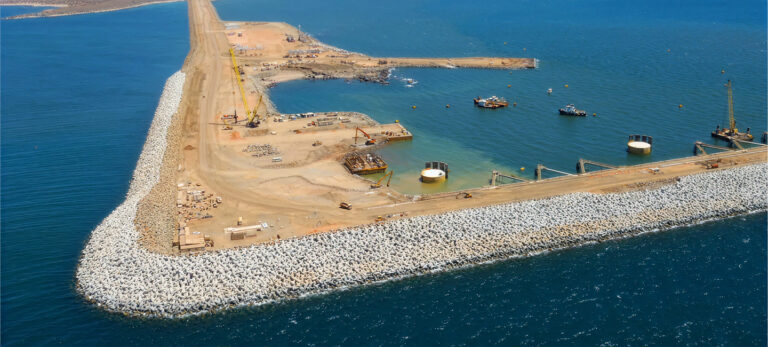
Climate change, as one of the fundamental challenges of this century, has had a wide-ranging impact on coastal and marine infrastructure. Ports and wharves, which play a vital role in maritime transport, international trade and economic development, are directly exposed to the consequences of climate change, in particular, rising sea levels, increasing wave intensity, storm surges and coastal erosion. As a result, it is essential to review the principles of design and operation of these structures.
The rise in average sea level is one of the most important consequences of climate change that directly affects the design level of ports and docks. Rising water levels can cause temporary or permanent submersion of structures, reduce the free height of docks, and disrupt loading and unloading operations. For this reason, in new designs, increasing the level of the dock deck, predicting an appropriate safety margin, and considering long-term sea level rise scenarios have become particularly important.
Intensification of hydrodynamic conditions, including increased wave height and energy, and more severe storms, are other impacts of climate change on ports. These conditions can lead to increased forces on port structures, fatigue of materials, and reduced useful life of piers. In response to these challenges, the use of advanced numerical modeling, the application of higher safety factors, and the selection of materials resistant to marine corrosion and abrasion in the design of structures have become essential.
Coastal erosion and changes in sedimentation patterns are also important consequences of rising sea levels. These phenomena can cause bed instability, the need for frequent dredging, and increased port maintenance costs. In this regard, environmentally friendly structural design, the use of optimal breakwaters, and sediment management strategies play an important role in reducing negative impacts.
From an operational perspective, climate change increases the risk of disruption to port operations. Temporary closures of ports due to adverse weather conditions, damage to equipment, and increased maintenance costs are among the consequences of operating in new climate conditions. For this reason, developing risk management plans, continuously monitoring environmental conditions, and increasing operational flexibility of ports have become increasingly important.
Overall, climate change and rising sea levels have highlighted the need for a transformation in the design and operation of ports and docks. Adopting approaches based on sustainable development, resilient design, and smart management can play an effective role in increasing the resilience of port infrastructure and ensuring their safe operation in the future.